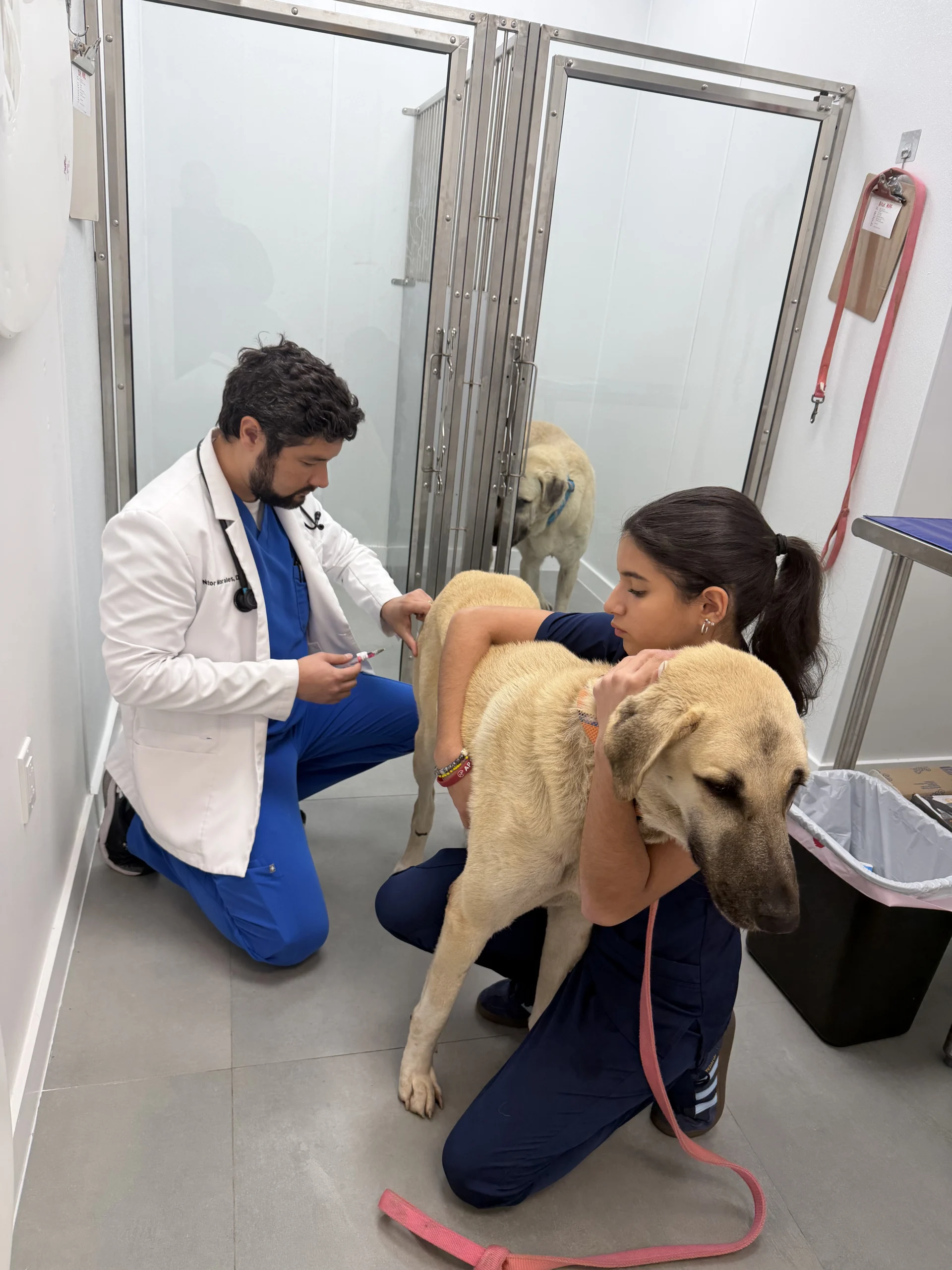
Pet vaccinations in Miami, FL are one of the most important steps you can take to protect your dog or cat from life-threatening diseases — and at Your Family Veterinarian, we make the process simple, stress-free, and tailored to your pet’s specific needs. Miami’s year-round warm climate and dense pet population create real, ongoing exposure risk for diseases like parvovirus, rabies, leptospirosis, and Bordetella. Staying current on vaccinations is not just a formality — it is active protection for your companion.
Dr. Morales and Dr. Fernandez build individualized vaccine plans based on your pet’s age, lifestyle, and health status rather than following a one-size-fits-all schedule. As a husband-and-wife veterinarian team practicing right here in Miami, they take the time to explain which vaccines your companion truly needs and why — combining evidence-based preventive care with the fear-free handling techniques that keep even anxious pets calm during visits.
How Vaccines Protect Your Pet
Vaccines work by introducing a modified or inactivated form of a disease-causing organism into your pet’s body. This exposure triggers the immune system to produce antibodies without causing actual illness. When your pet later encounters the real disease, their immune system recognizes it immediately and mounts a strong defense that prevents infection or significantly reduces symptoms.
Different vaccines protect against different diseases, and not every pet needs every available vaccine. Core vaccines protect against the most dangerous and widespread diseases that pose serious risk to all pets. Non-core vaccines target diseases that only threaten animals in specific situations, such as those who board frequently, visit dog parks regularly, or live in areas where certain infections are common.
Building Immunity Over Time
Puppies and kittens receive temporary immunity from their mothers through nursing, but this protection fades within the first few months of life. A series of vaccines given at specific intervals builds lasting immunity as maternal antibodies decrease. Young pets typically need vaccines every three to four weeks until they reach 16 to 20 weeks of age.
Adult pets need booster shots to maintain strong immunity throughout their lives. Some vaccines provide protection for one year, while others last three years or longer. Blood tests called titers can measure antibody levels and help determine when boosters are truly necessary, allowing for a more personalized approach to your pet’s preventive care.
Essential Vaccines for Dogs
Rabies vaccination is required by law in Florida and protects against a fatal disease that can spread to humans. The DHPP combination vaccine guards against distemper, hepatitis, parvovirus, and parainfluenza — the core diseases forming the foundation of every dog’s preventive plan. Parvovirus is particularly active in Miami’s warm, dense-population environment.
Rabies Core
Fatal neurological disease. Required by Florida law for all dogs.
DHPP Core
Distemper, hepatitis, parvovirus, parainfluenza. Essential for all dogs.
Bordetella Lifestyle
Kennel cough. Required by most Miami boarding and grooming facilities.
Leptospirosis Lifestyle
Bacterial kidney and liver disease. High relevance in Miami’s warm, wet climate.
Canine Influenza Lifestyle
Dog flu. Recommended for dogs who board, attend daycare, or group classes.
Additional Vaccines for Dogs
Leptospirosis vaccination prevents a bacterial infection spread through contaminated water and soil — particularly relevant for Miami dogs who spend time outdoors near standing water or wildlife. The Lyme disease vaccine is discussed for dogs who travel to tick-heavy areas outside South Florida. We evaluate each dog’s specific lifestyle and exposure to determine which non-core vaccines provide genuine benefit.
Essential Vaccines for Cats
Rabies vaccination is required for cats just as it is for dogs, protecting against the same fatal viral disease. Even indoor cats need rabies protection since bats can enter homes, and infected wildlife sometimes makes contact with pets through windows or outdoor enclosures. Florida law mandates rabies vaccination for all cats.
Rabies Core
Fatal viral disease transmissible to humans. Required by Florida law for all cats — including indoor-only cats.
FVRCP Core
Protects against feline viral rhinotracheitis, calicivirus, and panleukopenia. Required for all cats — these viruses can transmit on clothing and shoes even to indoor cats.
Feline Leukemia Lifestyle
Prevents immune-suppressing infection that causes cancer. All kittens should receive it. Ongoing boosters recommended for outdoor cats or those living with FeLV-positive cats.
Additional Vaccines for Cats
Adult indoor cats who never encounter other felines may not require continued feline leukemia boosters — which is why we discuss your cat’s specific lifestyle when creating their vaccination schedule rather than applying a one-size-fits-all protocol.
Vaccination Schedule and Timing
Puppies typically begin vaccinations between six and eight weeks of age, receiving boosters every three to four weeks until they are at least 16 weeks old. This series ensures protection develops properly as maternal antibodies fade. Missing doses or spacing them too far apart compromises immunity and may require restarting the entire series.
Kittens follow a similar schedule, beginning vaccines around the same age and receiving boosters at regular intervals. Adult pets moving to a new home or those with unknown vaccination history receive an initial vaccine followed by boosters timed according to the specific vaccine used.
1
Puppies & Kittens
Start at 6–8 weeks. Boosters every 3–4 weeks until 16–20 weeks old as maternal antibodies fade.
2
Adult Pets
Annual or every-3-year boosters depending on the vaccine. Titer testing can help personalize the schedule.
3
Senior Pets
Schedule reviewed at bi-annual wellness exams. Vaccine needs adjusted based on health status and risk.
4
Unknown History
Pets with no records receive an initial vaccine then boosters timed to the specific vaccine protocol.
Annual Wellness Exams and Vaccine Updates
We maintain detailed digital medical records tracking every vaccine your pet receives, making it easy to stay on schedule. We review vaccination status at every wellness exam and recommend boosters only when they are due according to current guidelines and your pet’s risk factors — not out of habit or routine over-vaccination.
Side Effects and Safety
Most pets experience no side effects from vaccines beyond mild soreness at the injection site. Some animals feel slightly tired or lose their appetite for a day or two after vaccination. These minor reactions indicate the immune system is responding appropriately and resolve quickly without treatment.
✓ Normal Reactions — No Concern
‣ Mild soreness or swelling at injection site
‣ Slight lethargy for 24–48 hours
‣ Reduced appetite for a day or two
These signs confirm the immune system is responding. They resolve on their own.
⚠ Seek Immediate Care If You Notice:
‣ Facial swelling or hives
‣ Vomiting or diarrhea
‣ Difficulty breathing
‣ Collapse or extreme weakness
Serious reactions typically appear within minutes to a few hours. We monitor pets after vaccines and remain available for concerns after you leave.
The benefits of vaccination far outweigh the small risk of reactions. Diseases like parvovirus, distemper, and rabies kill or severely harm unvaccinated pets regularly. The minor discomfort of a vaccine injection and the tiny chance of side effects represent a far better outcome than facing these preventable illnesses.
Affordable Pet Vaccinations in Miami, FL
We understand that pet care costs add up, especially when you have multiple animals or a young pet requiring several rounds of vaccines. Our annual vaccine bundle provides comprehensive protection at a value price, making it easier for families to keep their pets current on immunizations. We accept CareCredit and Cherry financing to ensure financial concerns never prevent your pet from receiving necessary preventive care.
Many pet insurance plans cover routine vaccinations as part of wellness packages. We work with all pet insurance companies and provide the documentation you need to submit claims for reimbursement. Investing in preventive care like vaccinations ultimately saves money by avoiding expensive treatments for diseases that vaccines could have prevented.
Frequently Asked Questions About Pet Vaccinations in Miami
Most dogs need the bordetella vaccine annually, though dogs who frequently board, attend daycare, or visit dog parks may benefit from a booster every six months. Bordetella is highly contagious in environments where dogs share close contact, and many facilities require proof of vaccination before entry. Dr. Morales and Dr. Fernandez will review your dog's lifestyle and risk factors at each visit and recommend the appropriate interval for your specific pet.
Bordetella vaccination is not required by Florida law, but most boarding facilities, grooming salons, doggy daycares, and training classes in Miami require it as a condition of entry. Even if your dog doesn't use these services regularly, the vaccine is recommended for any dog that interacts with other dogs outdoors, at parks, or during walks in populated areas. Miami's active outdoor culture means exposure risk is higher than in less densely populated cities.
Most pets experience only mild, short-lived side effects after vaccination, including slight lethargy, soreness at the injection site, and reduced appetite for a day or two. These reactions are normal signs that the immune system is responding to the vaccine. Serious reactions are rare but can include facial swelling, hives, vomiting, or difficulty breathing — if any of these occur within a few hours of vaccination, contact us immediately. Our team discusses your pet's history before every appointment to identify any pets at higher risk for reactions.
Yes — Your Family Veterinarian accepts CareCredit and Cherry financing for all services, including vaccination appointments and routine wellness care. These options allow you to spread the cost of your pet's care over time without delaying important preventive treatments. Ask our team about financing at your next visit or call us ahead of time and we'll walk you through the application process.
Puppies need to complete at least two to three rounds of their core vaccine series — administered every three to four weeks starting at six to eight weeks of age — before they're adequately protected for outdoor exposure in high-traffic areas. Until then, limit contact with unknown dogs and avoid areas like dog parks where unvaccinated animals may be present. Parvovirus in particular can survive in soil for months and poses a serious risk to incompletely vaccinated puppies. Dr. Morales and Dr. Fernandez will let you know exactly when your puppy has reached a safe level of protection based on their individual vaccination progress.
Schedule Your Pet’s Vaccination Appointment at Your Family Veterinarian
Protecting your pet’s health starts with proper vaccination, and we make the process as smooth and stress-free as possible. At our family-owned Miami practice, we use low-stress handling techniques, maintain separate waiting areas for cats and dogs, and offer treats and comfort during visits to help your companion associate our clinic with positive experiences.
Dr. Morales and Dr. Fernandez take the time to answer your questions, address your concerns, and build a long-term relationship focused on your pet’s well-being. Contact Your Family Veterinarian today to schedule a vaccination appointment and give your beloved companion the preventive protection they need to live a long, healthy life.
A clean and disease-free mouth is imperative for the health and longevity of your pet. Let our veterinarians protect and care for your pet’s teeth. Give us a call at (786) 885-1590 to schedule an appointment for your furry friend today.
“Dr. Morales is an amazing veterinarian. He has been treating my dog Marino since he was three weeks old and who is now three years old. He cares for Marino as if its his own pet. As a pet owner, I have always felt secure and confident with Dr. Morales’ care treatment my for Marino. I can’t wait for you and your wife to open your new pet clinic. Congratulations Dr. Morales and Dr. Fernandez on your business and new bundle of joy!”
—Yamaris
“My dog, a 100+ pound ball of nerves, makes it almost impossible for vets to treat him. However, Dr. Morales has such a way with animals that he’s the only one who makes him feel comfortable (they even take selfies together). I cannot say enough great things about him and the service he provides to all fur babies. Hachi can’t wait to visit soon!!!”